


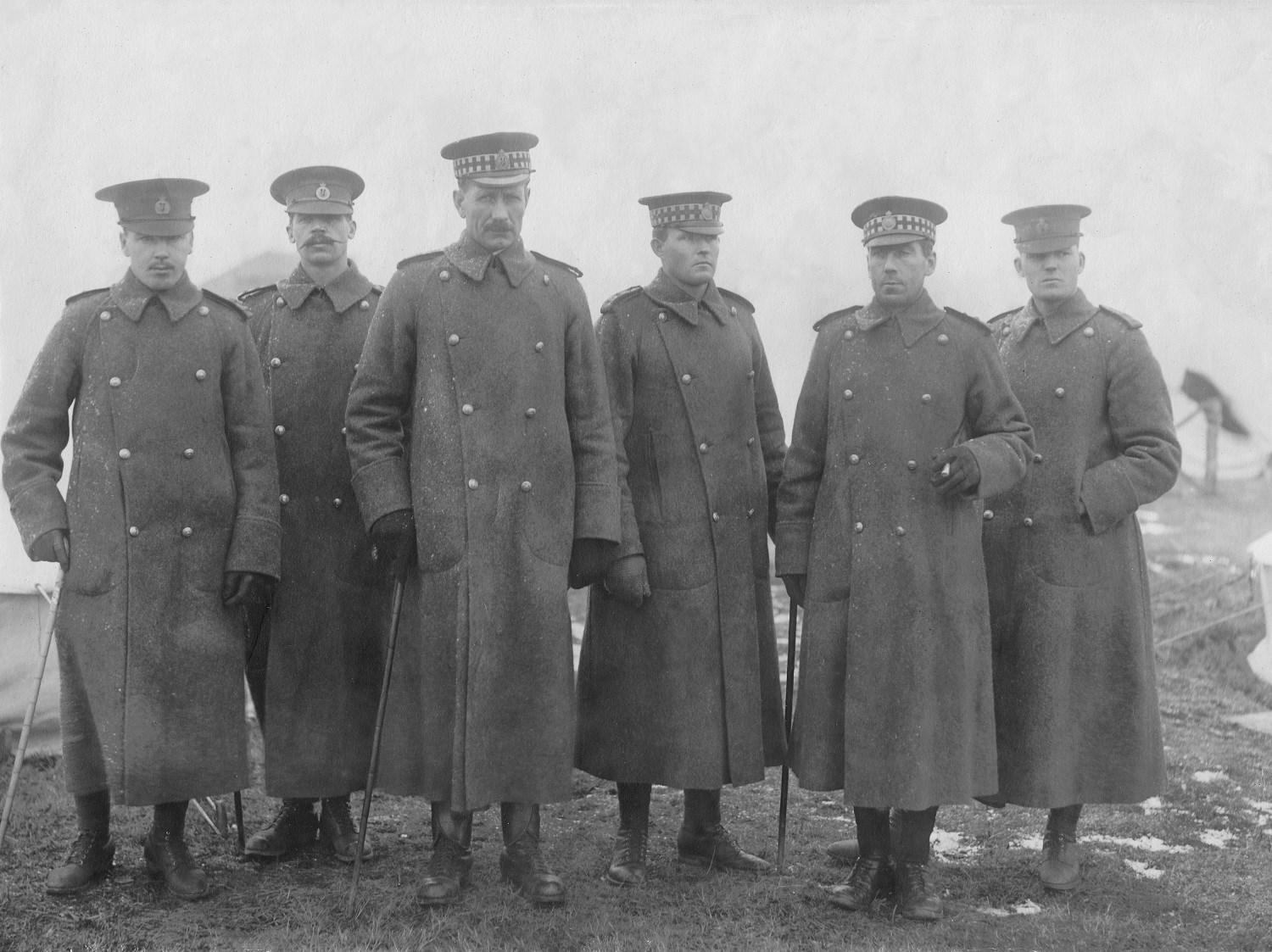
This is how military history shaped modern menswear. From the trenches of the First World War to the tailoring of today, some of menswear's most enduring pieces were born not from fashion, but from necessity.
Every November 11, Canadians pause to remember the men and women who served, sacrificed, and helped shape the world we live in.
Remembrance Day is an occasion for reflection, gratitude, and respect. It is also an opportunity to consider the quieter ways military history continues to influence our everyday lives.
How Military History Shaped Modern Menswear
One of those influences hangs in our wardrobes.
The trench coat. The bomber jacket. The peacoat. The cardigan. The field jacket. Even the way we button our jackets, structure our shoulders, and choose certain colours can be traced, at least in part, to centuries of military dress.
Some of the most enduring garments in menswear were never designed to be fashionable. They were designed to serve a purpose.
They were made for protection, mobility, identification, warmth, and endurance. Their beauty emerged from their utility.
And perhaps that is why they have endured.
1. The Trench Coat: Born from the Trenches
Few garments illustrate the relationship between military necessity and civilian elegance quite like the trench coat.
Its origins predate the First World War. Waterproof outerwear was developed throughout the nineteenth century. British manufacturers such as Burberry and Aquascutum played important roles in refining the garments that would eventually become associated with officers serving in the trenches.
During the First World War, the trench coat became an increasingly recognizable part of British officer dress.
Its defining details were practical rather than decorative.
The shoulder epaulettes accommodated rank insignia. The storm flap helped protect against rain. The belt secured the coat around the body, while the wrist straps could be tightened against the elements. Its generous cut allowed movement and layering.
Even the familiar khaki colour had a purpose. It offered a more subdued appearance than the brilliant uniforms of earlier military generations.
Following the war, returning servicemen continued wearing their coats in civilian life. Hollywood later cemented the garment's association with mystery, sophistication, and understated masculinity.
Today, the trench coat remains one of the most versatile pieces a man can own.
Worn over a tailored suit, it communicates refinement. Paired with knitwear and trousers, it introduces an effortless sense of authority.
What began as protective outerwear became a symbol of enduring style.
2. The Bomber Jacket: From the Cockpit to the City
Long before the bomber jacket became a fixture in contemporary menswear, it belonged to military aviators.
Early aircraft offered little protection from freezing temperatures and high-altitude winds. Pilots required outerwear that provided insulation without restricting movement inside cramped cockpits.
The American A-2 flight jacket, standardized in 1931, became one of the most recognizable examples.
It was constructed from leather, with a cropped body, fitted cuffs, and a waistband. The jacket combined durability with practical mobility.
Later developments included the B-15 and MA-1 flight jackets. They introduced new materials and silhouettes suited to changing aircraft technology.
The MA-1, introduced in the 1950s, became particularly influential. Its nylon construction, ribbed trim, and compact profile would eventually inspire countless civilian interpretations.
Today, the bomber jacket exists in leather, suede, wool, technical fabrics, and luxurious tailoring cloths.
At Conxeppt, this history is especially relevant to how we approach contemporary casual tailoring. A refined bomber can preserve the functional proportions of its military predecessor. It can also introduce softer materials, considered construction, and a more elevated silhouette.
The result is a garment that feels equally appropriate with tailored trousers or denim.
Its military origins remain visible, even when its purpose has changed entirely.
3. The Peacoat: Naval Utility, Timeless Authority
The peacoat is among the clearest examples of naval dress influencing civilian wardrobes.
Its history is associated with European seafaring traditions, particularly the heavy wool outerwear worn by sailors and naval personnel.
Life at sea demanded garments capable of withstanding cold winds, moisture, and difficult working conditions.
The peacoat's defining characteristics evolved around those demands.
Its dense wool provided warmth. The broad lapels could be turned up against the wind. The double-breasted front offered overlapping protection across the chest. Its relatively short length allowed sailors greater freedom of movement on deck.
Over time, the peacoat became closely associated with naval uniforms, including those of the British Royal Navy and United States Navy.
Its appeal in civilian menswear is remarkably similar today.
A well-cut peacoat creates a strong shoulder line, emphasizes the upper body, and offers a structured alternative to longer overcoats.
It is a reminder that excellent design does not always require reinvention.
Sometimes, it simply requires refinement.
4. The Field Jacket: The Evolution of Practical Elegance
The field jacket represents another important chapter in military-inspired clothing.
The American M-1943 field jacket established a practical approach to outerwear that would influence subsequent designs. Its successors included the M-1951 and the now-iconic M-1965, commonly known as the M-65.
The M-65 featured multiple front pockets, a concealed hood, a standing collar, and provisions for additional insulation.
It was designed for adaptability.
Soldiers needed to carry essential equipment while remaining mobile across changing environments and weather conditions.
Those same design principles explain the field jacket's enduring civilian appeal.
Its pockets provide functionality. Its silhouette allows layering. Its restrained, utilitarian character creates a compelling contrast when worn with more formal clothing.
Consider an olive field jacket over a fine-gauge turtleneck, tailored charcoal trousers, and suede boots.
The combination works because it balances structure with ease.
The field jacket also helped establish olive drab as a familiar colour in modern menswear. Alongside khaki, navy, and earthy browns, it remains one of the most useful colours in a considered wardrobe.
Military clothing has always understood something fashion occasionally forgets: versatility is a form of intelligence.
5. The Double-Breasted Jacket: A Legacy of Naval Dress
The double-breasted jacket has become one of the strongest expressions of classic tailoring.
Its overlapping front and symmetrical rows of buttons are closely associated with naval uniforms and traditional maritime outerwear. Still, the history of double-breasted clothing extends beyond the military.
Naval coats helped establish many of the visual characteristics we recognize today: substantial lapels, a structured chest, and a commanding silhouette.
Over time, these influences entered civilian tailoring.
The double-breasted suit became particularly prominent during the twentieth century. It was embraced by businessmen, entertainers, and influential figures who appreciated its distinctive proportions.
Unlike a single-breasted jacket, the double-breasted silhouette creates an uninterrupted visual structure across the torso.
When properly fitted, it can emphasize the shoulders, define the waist, and create a powerful sense of proportion.
At Conxeppt, we consider these details carefully. Lapel width, button placement, jacket length, and fabric selection should complement the individual rather than simply reproduce a historical silhouette.
The goal is not to dress like an officer.
It is to understand why certain design principles have remained relevant for generations.
6. Military Colours: Why Navy, Khaki, and Olive Never Disappear
Military influence extends well beyond the garments themselves.
Consider the colours that form the foundation of so many modern wardrobes.
Navy blue carries centuries of maritime associations. Khaki became an important military colour during the nineteenth century, as armies moved away from conspicuous uniforms toward more practical field dress. Olive drab became especially recognizable through twentieth-century military uniforms.
These colours were selected for practical reasons, including concealment, durability, uniformity, and the demands of different environments.
Today, they remain remarkably versatile.
Navy communicates restraint and reliability. Olive introduces depth without demanding attention. Khaki pairs naturally with almost every foundational menswear colour.
The military did not invent these colours, but military adoption helped establish their enduring place in modern clothing.
It is no coincidence that a carefully constructed wardrobe often relies on the same restrained palette.
The difference is in the application.
Where military dress prioritizes uniformity, personal style allows individuality.
7. The Wristwatch: When Time Became Essential
Military influence is not limited to clothing.
The wristwatch is another example of an accessory whose widespread adoption was accelerated by warfare.
Before the twentieth century, pocket watches were common among men. Wristwatches existed, but they had not yet become the standard masculine accessory we recognize today.
The First World War changed that.
Military personnel needed to coordinate movements, synchronize operations, and check the time without reaching into their pockets.
Wristwatches offered an obvious advantage.
Protective cases, legible dials, luminous markings, and durable straps became increasingly important.
Following the war, returning servicemen helped normalize the wristwatch in civilian life.
Today, watches occupy a unique position at the intersection of engineering, craftsmanship, and personal expression.
What began as an instrument of practical necessity became one of the defining accessories of modern menswear.
Beyond the Uniform: The Difference Between Fashion and Enduring Style
There is an important distinction between clothing designed to attract attention and clothing designed to perform.
Military garments were rarely concerned with trends. They were developed to solve problems.
They needed to withstand difficult conditions, permit movement, protect the wearer, and serve a defined purpose.
That philosophy has influenced some of the most successful designs in menswear.
It also speaks to something we believe strongly at Conxeppt.
A wardrobe should be built with intention, not accumulated by impulse.
The most valuable pieces are not necessarily those that make the strongest impression on the day they are purchased. They are the pieces that continue to earn their place in your wardrobe years later.
A well-made overcoat. A properly fitted double-breasted jacket. A versatile bomber. A substantial wool cardigan.
Their longevity is not accidental.
Their design has been tested, refined, and reinterpreted over generations.
The strongest wardrobes understand the relationship between heritage and modernity.
They respect what came before without becoming trapped in the past.
Remembrance Day: Remembering the People Behind the History
On November 11, the conversation must ultimately return to something far more important than clothing.
At the eleventh hour of the eleventh day of the eleventh month in 1918, the armistice that ended the fighting of the First World War came into effect.
For Canada, the war came at an extraordinary human cost. More than 61,000 Canadians lost their lives during the conflict or in its immediate aftermath.
Today, Remembrance Day honours those who served and those who never returned. It honours the families who endured their absence, and the generations of veterans whose sacrifices continue to shape our country.
The history of military clothing offers a fascinating perspective on the evolution of style. But the garments themselves are not the legacy we gather to honour.
The legacy belongs to the people who wore them.
To the individuals who left their families, their careers, and their ordinary lives behind.
To those who returned forever changed.
And to those who never had the opportunity to return at all.
As a Canadian brand built around craftsmanship, heritage, and personal expression, we believe understanding history adds meaning to the things we create and wear.
This Remembrance Day, we recognize the service and sacrifice of Canada's veterans and military personnel, past and present.
We remember not simply what they wore, but what they endured.
Lest we forget.


